The bridges could wait one day.
For weeks the 89th Fighter Squadron had been going after the spans across Burma — the rail lines, the river crossings, the choke points that kept the Japanese army fed and moving. But war in the China-Burma-India theater wasn’t only made of the missions that made it into the history books. It was also made of days like October 17th — long, unglamorous, absolutely essential — when the job wasn’t to destroy anything at all. It was to watch.
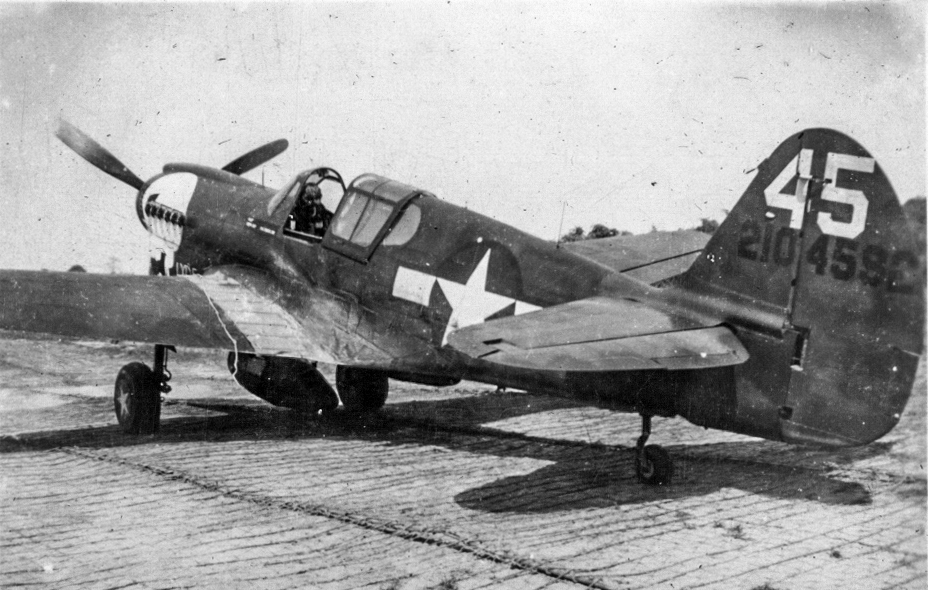
Operations Order Number 32 called for nine missions. Twenty-nine pilots. Eight hours of P-40s climbing off the strip and settling into the sky over the Assam Valley, from before eight in the morning until the light was starting to go long in the afternoon. No bombs falling. No bridges dropping into rivers. Just squadron mates, in pairs and fours, doing the unglamorous work of making sure the valley stayed theirs.
It started at 0750, before most of the camp had finished breakfast. Captain S. Combs and 2nd Lt. W.H. Warren took two aircraft up under the call sign F-170 — a weather check. Somebody had to go up first and read what the sky was going to do before anybody trusted it with a patrol.
The sky must have checked out, because at 0845, F-171 rolled out four more: 1st Lt. E.R. McMillin Jr., 2nd Lt. P.R. Adair, 1st Lt. W.F. Duke, and 2nd Lt. J.P. Smith. McMillin, Duke, and Adair had trained together back at Mitchell Field, before any of them had seen the Hump or the valley below them now — before Burma was anything more than a name on a map they’d have to learn. Now they were flying patrol together over it, same as they’d flown together back home.
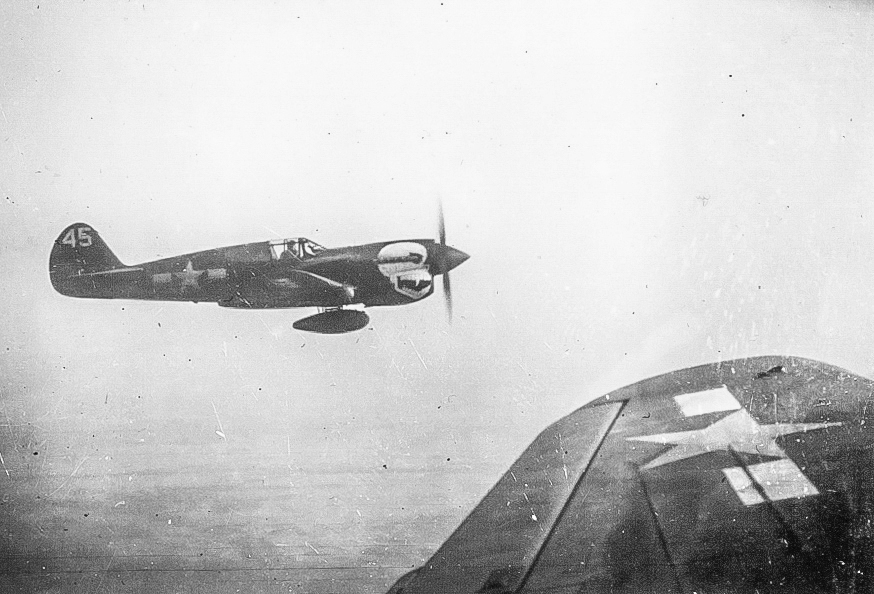
Ten minutes behind them came F-172 — Captain R.L. McQuillen Jr. leading 2nd Lt. W.K. Snyder, 1st Lt. J.C. Moore Jr., and 2nd Lt. C.B. Hardy out on a parallel line. Two patrols in the air at once now, watching two different pieces of sky.
At 0915, F-173 went up — Captain L.D. Howie, Captain A.J. Ortmeyer Jr., and 2nd Lt. R.D. Bell, three ships on patrol while the morning wore on.
Then, at 1115, something different. F-174 wasn’t a patrol — it was a search. Captain W.S. Harrell and 2nd Lt. W.H. Warren, back up again after his early weather run, went out looking for something the record doesn’t name. Maybe a downed transport. Maybe a report of Japanese aircraft that never amounted to anything. The operations order doesn’t say, and eighty years on, there’s no one left to ask. Whatever it was, two P-40s went looking for it, and half an hour later F-175 followed with another weather check — Captain J.H. Hunt and 1st Lt. J.J. Ferguson, up to read the afternoon sky the way Combs and Warren had read the morning’s.
The early afternoon belonged to F-176, at 1320 — four more into the air: 2nd Lt. R.T. Rhodes, 2nd Lt. D.V. Shepard, F/O D.W. Troy, and 1st Lt. D.P. Taylor, back on patrol over the valley. Half an hour after that, F-177 sent Captain W.J. Webb and Captain J.E. Ward out on the day’s second search mission — two more captains, two more P-40s, looking for whatever it was the squadron needed found.
And at 1550, as the afternoon started leaning toward evening, the last mission of the day lifted off. F-178 — four aircraft, one last patrol: 1st Lt. R. Braucher, 2nd Lt. J.P. Smith, 1st Lt. W.F. Duke, and 2nd Lt. P.R. Adair. Duke and Adair again, same as they’d flown that morning, closing out the day the way they’d opened it.
By the time F-178 came home, twenty-nine pilots had flown nine missions and logged eight hours of Assam Valley sky between them — and not one line in the operations record mentions combat. That was the point. Somewhere over that valley, on any given day, the transports were flying the Hump, carrying the fuel and the ammunition and the everything-else that kept China in the war. The 89th’s job on October 17th wasn’t to make headlines. It was to make sure those transports got where they were going, and that if the Japanese came looking for them, somebody would already be up there, watching.
No bridges fell that day. No headlines were written. Just twenty-nine men doing the long, quiet work of keeping the sky honest — the kind of day that, added up a hundred times over, is most of what a war actually looks like.