October 1944: Lieutenant Ellis Fisher and the Bridges of Northern Burma
While the 89th Fighter Squadron was grinding through October at Myitkyina, the 90th Fighter Squadron was conducting its own relentless war from Tingkawk Sakan.
For the 90th, October 1944 would become the most productive bombing month in the squadron’s history.
At the center of much of that activity was Lieutenant Ellis Fisher.
The Thetkegyin Bridge
October 1st began badly for the Japanese railroad and transportation network around Indaw Lake.
The target was the Thetkegyin Bridge, just north of the lake. Beginning at 11:45 in the morning and continuing until 5:15 that afternoon, eight waves of Thunderbolts attacked the bridge.
Five and a half hours.
Eight waves.
Fifty-eight quarter-ton bombs.
Wave after wave of P-47s went in.
And the bridge held.
Bombs landed close to the structure. Others struck the approaches and the nearby town of Thetkegyin. But the span itself stubbornly remained standing.
Then Lieutenant Fisher made his pass.
He put a bomb directly on the north span.
The bridge finally gave way, and its transportation problems were, as the squadron historian recorded with characteristic understatement, “over for a while.”
It was an extraordinary finish to an already remarkable day.
October 1st had produced the squadron’s busiest bombing schedule to that point, with 37 bombing sorties flown. After eight waves had attacked the bridge, Fisher’s single pass finally accomplished what the earlier attacks had failed to do.
Fisher’s Close Call
Just three days later, Fisher had a very different kind of encounter with a P-47.
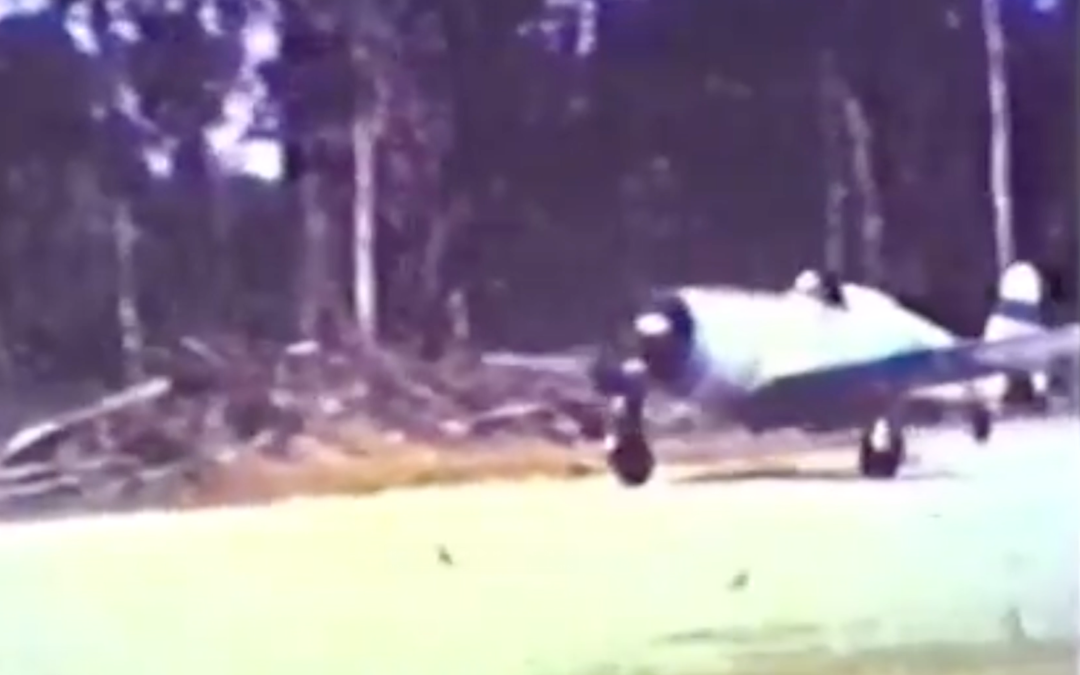
On October 4th, he was taking off when the aircraft suffered a blown tire.
The squadron historian described what happened in almost matter-of-fact terms:
“Planes roar down the runway all day. You don’t even realize you are listening to them, but let there be a break in that rising roar and you stop what you are doing and make a dash for the runway.”
That day, the break came while the men were eating.
Fisher was taking off in his P-47 when the tire blew. The Thunderbolt was wrecked.
Fisher, fortunately, escaped unscathed.
It was the kind of incident that could easily have ended very differently. Yet within days, Fisher was back in the air.
Back Over the Indaw Railroad
On October 6th, Fisher was again on the mission schedule.
The target this time was a railroad bridge south of Indaw, part of the same transportation corridor around Indaw Lake that had already seen the destruction of the Thetkegyin Bridge five days earlier.
The Japanese depended heavily on the railroad network to move supplies toward the fighting along the Irrawaddy front. Bridges were therefore critical targets. Destroying one could interrupt the movement of men and matériel and force Japanese repair crews into the open to restore the line.
Fisher flew the mission.
The railroad bridge was hit.
And he brought his Thunderbolt home.
But the squadron was already looking for a better way to destroy these structures.
A New Way to Attack Bridges
On October 8th, the 90th introduced a new technique: buzz-bombing.
Traditional bridge attacks involved diving from roughly 2,000 feet at speeds approaching 400 miles per hour before releasing the bombs.
The new method brought the Thunderbolts down much lower.
The aircraft approached in a relatively flat glide of approximately 30 degrees, traveling around 275 miles per hour. Bombs were released at only about 200 feet.
The bombs were fitted with four-to-five-second delay fuses and equipped with spikes designed to prevent them from skipping after release.
The objective was also changing.
Instead of concentrating on the bridge span itself, the pilots aimed for the supports.
That distinction mattered.
A damaged bridge span could potentially be repaired. Destroy the supports, however, and the Japanese repair crews faced a much larger problem.
For the pilots of the 90th Fighter Squadron, it meant getting closer to the ground, placing the Thunderbolt—and themselves—in greater danger, and delivering the bomb with precision.
But the potential payoff was enormous.
The bridges of northern Burma were more than pieces of steel and concrete. They were links in the Japanese supply network.
Break enough of those links, and the entire system began to slow.
For Lieutenant Ellis Fisher and the men of the 90th, October 1944 was becoming a campaign fought one bridge at a time.